2017-12-09

Is An AFRICAN DWARF FROG The Right Pet For You?

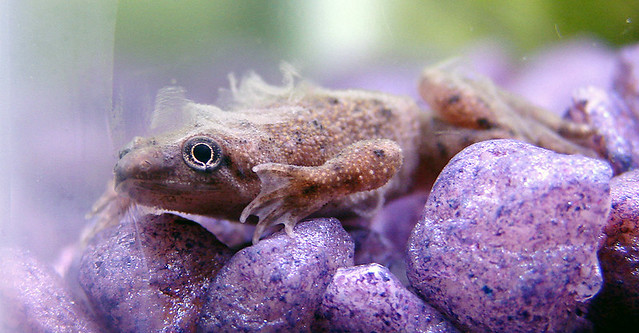
Cute Lil' Bugger
Photo by Furryscaly
African Dwarf Frogs are one of the absolute best choices for first-time owners of exotic pets, but they're also well suited for experienced keepers and breeders. They're very simple to take care of, and setting up the aquarium isn't particularly difficult either as these frogs are exclusively aquatic and so require nothing more complex than a basic fish tank. This makes for a very welcome change from the problematic task of creating a home for a creature that will need both land and water, as is the case with many other amphibians.

One of the reasons many people shy away from getting their first exotic pet is the unpleasantness of feeding the animal live food such as cockroaches or baby mice, which is understandably upsetting (or just plain disgusting!) for many people. Fortunately, this isn't an issue with African Dwarf Frogs, because while they can be fed live food, frozen food can be used instead, or even pellets, as these frogs use scent rather than movement to find their food. They should, however, be fed every day, so if you're not around for long periods of time, a different pet would probably be more suitable.

Unlike many amphibians regularly found in the pet trade, African Dwarf Frogs are pretty small (not exceeding 1.5" normally) and they don't take up too much space, with only two gallons of water needed for each frog. So even if you live in a tiny apartment, there's almost guaranteed to be enough room for a few of these little creatures.

While they're perfectly content to live alone, you can keep several African Dwarf Frogs in the same tank, or even keep other creatures with them if you want. Putting a few fish in with the frogs is pretty common practice, and shouldn't cause any problems as long as they're not aggressive and not too large or small so that they will neither eat nor be eaten by your frogs! Keeping too many fish risks altering the acidity of the water which can be harmful to your African Dwarfs, but if numbers are low you should be fine. Tetra Fish and Goldfish are common tankmates for these frogs, and sometimes alone Betta Fish will work out as well. Basically, it's possible to fit a few cool pets in the same small tank without harming them or compromising their quality of life.


Activity levels are often a concern for frog owners, as they're often thought of as slow and boring creatures that never really do much. However, being among the most sociable, active and energetic frogs in the pet trade, African Dwarf Frogs don't fit this stereotype. As they need to swim to the top of the tank for air but feed at the bottom, they can't sit still for too long even if they wanted to.

Most individuals will live for around five years (some much longer), so you have to be prepared for a fairly long commitment when you first get some frogs. Still, they're extremely easy to care for, good fun to watch and will complement many of the fish you may already have, all of which makes African Dwarf Frogs a great choice for your first exotic pet.


2017-12-08

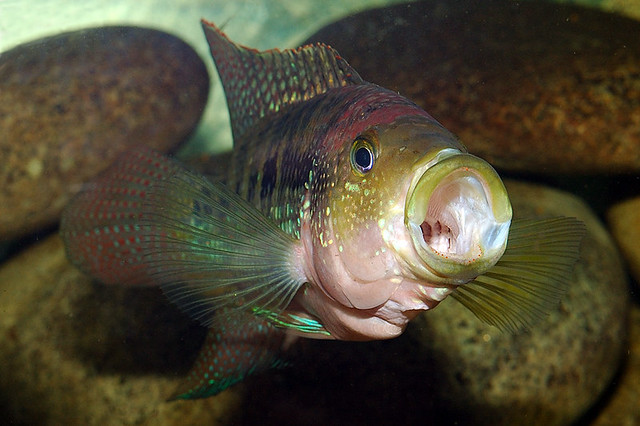
JACK DEMPSEY Cichlid - Rocia octofasciata

Jack Dempsey Cichlid - Rocia octofasciata


2017-12-07

Aquarium AQUASCAPING - Three Big Mistakes To Avoid

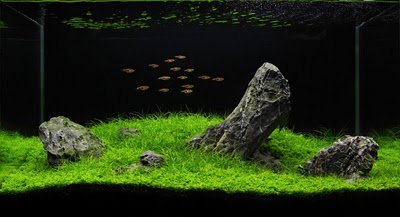
Iwagumi
Photo by goldenfish2010
Here are three big mistakes that most novice aquarium hobbyist made. You should avoid such errors because it could potentially disrupt and harm your fish and plants.

Overpopulation
Do not overpopulate the aquarium with too many fish and plants, as it will cause water quality to degrade very quickly. More fish does not mean the tank will look more attractive. Have you ever wonder if it looks good on a bus or a train that is severely overcrowded with passengers?

When you set up a new aquarium, introduce only a few fish between several weeks or even between months if possible. Select the smallest fish possible and build a community around a small school of fish and perhaps one or two showcase fish of your choice and modest group of bottom cleaners such as algae eating fish.

Incompatible Fish Species
Some species thrive in large numbers and prefer to live in a colony. On the other end of the spectrum, there are species that are extremely territorial in nature and will not tolerate the company of others, not even within its own kind.

You should not mix goldfish with angelfish because the latter is known to be aggressive and will attack goldfish relentlessly. Likewise, angelfish are threats to the guppies so do not mix them in the same tank.

Fish incompatibility resulting in fights and fatalities are further compounded by small aquarium footprint whereby the limited area of movement, dwelling, and congestion often leads to frenzy attacks among fish, even within its own species.

When in doubt, check with the aquarium fish seller or do some research on fish compatibility before you decide to buy and put them into your aquarium. The Smaller tank is more critical in regard to the type of species that are able to coexist without conflicts. You can arrange rocks and plants to serve as hideouts for species that are more passive in nature.

Too Many Artificial Decorations
Avoid artificial plants and structures. Some people think it is a hassle to clean up debris left over by residues of dead aquatic plants thus they opt for artificial ones instead. You need to be mindful that some of these cheap artificial decorations are toxic to fish. Furthermore, isn't it better to populate your tank with natural live habitats?


Let nature works its way to create the required balance ecological system. Consider live plants and ecologically friendly gravel for your aquarium. After all, live plants produce oxygen supply to the fish. In between, it is important to take note that the smaller the aquarium the more pertinent it is to do daily testing of the water quality.

Observe fish behavior such as gasping, hiding, drifting, or darting, it might be an indication of imminent health dangers lurking somewhere.


2017-12-06

JACK DEMPSEY Cichlid - Knowing How And What to Feed?

Jack Dempsey
Jack Dempsey Cichlid - Photo  by Nikonian Novice 
The Jack Dempsey (Rocio octofasciata) cichlid fry may be small but they will tend to sack up crushed flake food or even pulverized cichlid pellets. The first three days of their life they will only absorb the proteins from the food they sack. Even then these tiny creatures will nibble around at things possibly on some microorganisms.

I would prefer the use of an established tank since the good source of microorganisms and bacteria that are covering the gravel or even bare glass bottoms are found. Most beneficial bacteria found in an established aquarium are full of vitamins and minerals unlike in new set-up tanks they are barely present or none at all. Tiny white worms visible on tank glass are not likely to be found in new tanks.

However, even with established tanks, it is still essential to provide a bit of regular food after a few days but if ever the parents are still with the fry they will most likely take care of their young's for a few weeks. Parents will gladly take the food you give, chop it up and spill out tiny crumbs of it through their gills and mouth to their fry. How amazing it is to see both male and female cichlid participate in the feeding process.

But if keepers want to transfer the eggs without the parent's presence, then the aquarist job would be more difficult. When feeding, be certain to crush the food to a powdery form. Be wary that for the first ten days of their life is crucial and many will possibly die. After a week or so they would be large enough to be able to consume on newly hatched Artemia brine shrimp. Micro worms are also an excellent option but remember not to overfeed Jack Dempsey cichlid.

Feed the fry 5 times a day for the first 3 weeks, lesser than that will hinder growth or even weaken health and eventually perish. Remove any debris as soon as possible. Do not be weary to see a brood of 500 fries will end up to 200 in a matter of 4 weeks - this is the call of nature no matter how much care is bestowed on them.

The appropriate size for a nursery is 5 - 10-gallon aquarium for the first month in order to keep fry close to each other during feeding time. Water conditions are tolerable meaning not critical but the conditions of an established tank are important. It must have a temperature of 72 - 82 degrees Fahrenheit and a pH level of 6.5 - 7.2 is adequate for the fry. Maintain that consistency no matter what the parameter of an established tank is.


As they grow larger it is best to transfer them to a larger 20-gallon tank probably after 5 - 6 weeks. Imagine a 20-gallon tank with 150 to 200 Jack Dempsey cichlids, so I guess you have to figure out how to house the rest of them as they mature. It is also reasonable at this time to move back the parents to their original tank.
As the Jack Dempsey cichlid matures larger types of food may also be fed. Find out more about the proper feeding of the mature cichlids.

    Lacey Bryant is a cichlid enthusiast and author, who has been caring for cichlids for over 15 years. She has been breeding Cichlids for years and it has become her passion to share her knowledge about their proper care.
    Article Source: EzineArticles


2017-12-05

SNAKES As Reptile Pets

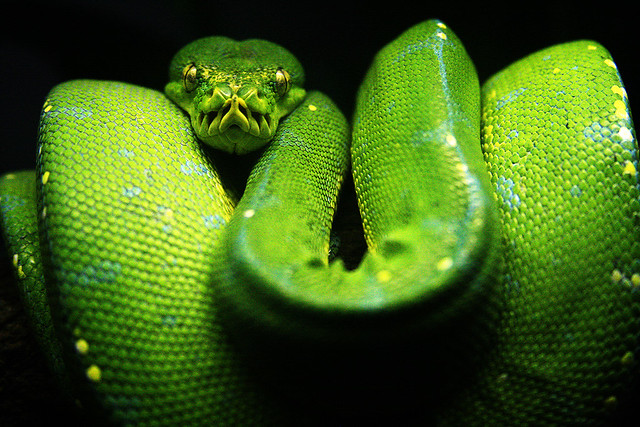
Green Tree Python
Green Tree Python - Photo  by nasmac 
Most common snakes kept as pets in the reptile category are the corn snakes and the Royal Python. Pythons do have teeth and will bite even though they kill their food by constriction.  A python can possibly live to be 40 years old when conditions are right and have been known to be the longest snake on record, reaching well over 30 feet in length!  While this is the exception to the rule, it should still be a consideration when choosing a snake for a reptile pet.

You must know the proper requirements for your snakes before you commit to keeping more than one in the same enclosure.  All snakes are not the same!  Feeding them together is discouraged as well. Some snakes eat other snakes, too, so be careful about your choices.  There are people who live in the country who will keep the king snake alive simply because it is known to kill other harmful snakes.

There are different types of corn snakes and different types of pythons.  Know your type before you purchase.  Some make better choices than others for pets.  Don't touch your snake if it's in the water bowl and has developed milky eyes.  This could be a sign of shedding.  Because the snake has limited vision, it could strike out at you in defense, not knowing you don't intend to harm it.

There are things that could make your snake reluctant to eat.  Force feeding is not a good idea. Illness, stress, shedding, temperature, humidity, and occasional fasting may make your snake's appetite change.

The anaconda is not the longest snake ever known, but it is the heaviest.  Although anacondas have been kept in captivity, it is not advisable.  For one thing, it isn't fair to the snake.  Their natural environment is a river.  Some people have gone so far as to keep venomous or dangerous reptiles for pets, including rattlesnakes.  This is highly discouraged, especially in homes containing children or the elderly.

Wildlife shows make the adventures with reptiles seem fun and exciting.  But most people should note that these people who interact with the snakes and other reptiles are experienced, trained professionals.  They didn't become enlightened overnight.

Scaled reptiles are classified as Squamata, which includes lizards and snakes.  Detachable jaws are one of the fascinating talents of the snakes.  The other qualification for inclusion as a Squamata is the scaly skin or shields.

Snakes are thought to have evolved from lizards---but most people are far more scared of snakes than they are of lizards!  It's ironic that the snake evolved from the lizard, yet lizards are one of the small animals the snake is known to eat.


Some snakes can climb trees to steal eggs from the bird nests.  They've even been known to devour the unfortunate bird left guarding the eggs.  Because the snake swallows its food whole, digestion is more complicated and tiresome for the reptile.  This will cause the snake to regurgitate if disturbed during digestion so it can escape danger.

Yes, snakes can be interesting pets and interesting reptiles.  Just make sure you know what you're dealing with before you attempt to make contact!


2017-12-04

Keeping MALAWI CICHLIDS

different Mbuna from Lake Malawi
Different Mbuna from Lake Malawi (Photo credit: Wikipedia)
Malawi Cichlids originate from the third largest lake in Africa and the eighth largest in the world, Lake Malawi. Lake Malawi is home to more fish species than anywhere else on earth. Being a rift valley lake, it is a very rocky lake with little vegetation. The edges of the lake provide a different type of habitat; more sandy with fewer rocks and more open water. These two different types of habitat give rise to two different groups of Cichlid; the rock dwellers (or mbuna) and non-rock dwellers.

If you are thinking of keeping Malawi Cichlids you will really need to decide which group you want to keep as generally the rock dwellers and non-rock dwellers do not get on well together. In fact, they do not particularly get with other types of fish, so you will really need to restrict yourself to just mbunas or non-rock dwelling Cichlids. Once you have decided you will need to set up your aquarium accordingly. For rock dwelling fish, it should come as no great surprise that you need plenty of rocks. Not only this though, your fish need plenty of little caves and places to hide and explore.

The non-rock dwellers prefer a sandy substrate and generally more open water. They should not have a completely bare tank though, they do need some interest. Typically they should have just a few rocks scattered over the floor of the tank, and they do not particularly need caves.

In their natural environment, Malawi Cichlids live in water temperatures of around 24-26C or 76-79F, therefore you will need to try and replicate this within your aquarium. In order to avoid variations in temperatures you will need to locate your aquarium away from heaters and out of direct sunlight.


2017-12-03

Carpenters Flasher Wrasse - A Must For a Marine Tank

Carpenters Flasher Wrasse -  Photo: Wikimedia
A Carpenter's Flasher Wrasse (Paracheilinus carpenter), also known as a Redfin Flasher Wrasse, or Carpenter's Fairy Wrasse, is a delightful addition to your saltwater fish tank. This fish is characterized by its rich orange color accentuated with blue vertical stripes. Its fins are also decorated with blue and yellow accents. What differentiates the male from the female species is the richness in color as well as the size of dorsal rays. Males tend to have a more distinct and rich color as well as elongated dorsal rays that are highly effective in attracting females during the mating season.

This species of fish is quite peaceful and less aggressive, requiring just about a tank size of 20 gallons to swim. Your tank should have a net placed on top for this fish is known to jump from the tank every now and then. Being among the less aggressive type of fish, Carpenter's Flasher Wrasse must be the first fish to be introduced into the tank. Other fish tend to fight and bully this fish if introduced when other fish have established territorial dominance in the tank. Take note, though, that this fish is highly possessive of its harem, and will fight other males in the tank for a mate. It would be best to keep a ratio of one male to four females to ensure peace among your Carpenter's Flasher Wrasse.

As with other marine tropical fish, the diet must be highly diversified in order to keep the colors rich and distinct. Although plankton eaters in the wild, aquarium kept Carpenter's Flasher Wrasse can be fed finely chopped seafood, mysid, and brine shrimp. In the wild, this species of fish propagate through egg-laying, although there is no known incidence of Carpenter's Flasher Wrasse breeding inside a home aquarium. The fish can be bought for 47.

    By BC Hodges
    BC is a cichlid enthusiast and wants to inform people of the great joy cichlids are to keep.
    Article Source: EzineArticles