2018-01-02

DISCUS FISH Health - How to Keep Your Discus Happy and Healthy For Years


Discus fish health truly has 2 main areas of concern and those are the fish's water and the discus fish's food. Of smaller concern, but worth discussing is that you must do a little analysis before you put your discus fish in with other species in your tank. They may not be good tank friends and this could cause your new pet stress.

Knowing what signs to have a look for can help enormously with discus fish health for the easy reason that treatment of sicknesses is boring and hard. It's best to do everything that you can to be preventive in your attempts at frustrating any stress causing environmental issues.

There are occasions where adding some medication to the water will solve the problem, however, this is not the case almost all of the time. Your discus fish's water is like the air that we breathe as humans. Should our air be soiled and polluted, we'll develop health issues. With discus fish, you need to keep their water clean and at the right temperature and pH levels. You will need to do a partial change in the water one or more times a week changing out between twenty-five and fifty percent of the water. You should have an excellent biological filter and ensure that it stays clean.

An alternative way to be fully certain that your discus stays healthy is by utilizing and reverse osmosis filter. A reverse osmosis filter uses a little, semi-permeable surface that permits only water molecules to pass through it, filtering out minerals and trace substances which are unhealthy for the discus. When using one of these, you could have to think about adding some minerals as this removes everything except pure water and there are a few things that your fish wants.

One of the largest health concerns with discus is bugs and worms that they can develop, and their immunological systems will keep them in check till they become stressed. Observing the fecal matter of your discus fish can show symptoms of bugs or worms in your fish. White feces, clear feces are 2 signs. Apart from their feces, you can tell mostly by their behavior. Bugs can bring about a number of observable symptoms from hiding, developing a darker color to food strikes and not eating.


Often times if a number of these symptoms happen, you can try doing a water change in the tank. Discus fish are terribly delicate to their environment and could cause them stress. If this doesn't do the job, there are medicines that you can put into the water that can help clear up any discus health issues.

Among those are metronidazole. Metro, as it's known, is step one in treating bugs should your discus get infected. Also common with these bugs are worms, so you must find a de-wormer to be employed in coordination with your Metro treatment.

As stated before, prevention is way easier than treatment when it comes to discuss health. Following these tips, while ensuring your discus has proper nutrient elements and feeding will ensure that you could have satisfied and healthy discus fish.


    Evelyn Stone is a discus fish expert. - Article Directory: EzineArticles


2018-01-01

Electric Blue Ram Cichlid

Electric Blue Ram (Male) - Photo: Wikimedia
One of the more recent additions to the aquarium trade is the ram, a color morph of the ram cichlid (Mikrogeophagus ramirezi) that was developed in 2009. Rams are still less commonly available than other ram varieties and may be more expensive. Be wary of rams sold at "bargain-basement" prices, as they may have been treated with hormones, a practice that weakens the specimens and reduces their lifespan. Always buy from a trusted, reputable dealer or breeder.

Housing an Electric Blue Ram
The ram is not recommended for beginners, but it is not overly difficult to keep either. One pair can be housed in a 20-gallon aquarium, while two pairs will require a tank of at least 40 gallons. As always, more water means that it will be easier for you to keep the water quality high and stable, and since the ram is sensitive to organic waste, such as nitrate, it is unwise to skimp on tank size if you manage to get your hands on this uncommon and beautiful fish.

Since the ram is a type of ram cichlid, your safest bet is to provide it with an environment similar to the habitat of its wild ancestors. Give your ram plenty of cover, ideally by including aquatic plants or submerged land vegetation in the setup.

Densely planted areas and surface cover, combined with at least one open area for swimming, would be ideal. In addition to plants, the electric ram should be given a few caves to shelter in. If you intend to breed the electric ram, provide it with several flat stones or breeding slates in the tank to choose among since this fish likes to deposit its eggs on a flat, horizontal surface.

Suitable Tankmates
The electric ram should never be housed with aggressive fish or quick and energetic species that will devour all the food before the ram finds it. A common mistake is to house ram cichlids and electric blue rams with other dwarf cichlids - avoid this at all costs. Keeping electric rams on their own isn't recommended either; they need some peaceful and docile species in the aquarium to feel safe. Go for slow-moving and tranquil species that won't outcompete the rams at mealtimes.


If your electric blue rams start displaying aggressive tendencies toward tankmates, try including more hiding spots m the setup. A scarcity of suitable sheltering spots can lead to aggressive behavior. Also, electric blue rams always get aggressive during the breeding period because they need to keep their youngsters safe.

Keeping Electric Blues
Electric blue rams should not be placed in newly set up aquariums; they need a stable environment with low levels of organic waste. Successful keeping normally includes mechanical and biological filtration as well as regular water changes. Strong water movement will not be appreciated because wild ram cichlids live in slow-flowing waters.

The normal temperature range for wild ram cichlids is 78 to 85F, and the water in which they live is soft and acidic. A pH value in the 5 to 6 range is ideal for electric blue rams, but aquarist-raised specimens normally adapt to anything below pH 7.1. There are even reports of aquarists successfully housing German blue rams in moderately hard water so this might be possible for electric blue rams as well.

Feeding an Electric Blue Ram
The electric blue ram is an omnivore and needs to be kept on a diet of both meaty and green foods. The stress of being moved to a new environment can make the fish lose its appetite, so be prepared to coax it with mosquito larvae or similar foods. Once it's eating enough, you can start introducing other types of food, such as flakes and pellets, as well. 

A well acclimated electric blue ram normally accepts many different types of food. Keep an eye on the fish during feeding time. As I mentioned, electric blue rams are a bit slow moving and may starve if kept with faster-moving species. To find out more, you can check out Electric Blue Ram Cichlid.


2017-12-31

LEOPARD GECKO - Eublepharis macularis

Leopard Gecko - Eublepharis macularis


2017-12-30

Tips on GOLDEN DAMSELFISH Care

English: Golden damsel (Amblyglyphidodon aureu...
Golden damsel (Amblyglyphidodon aureus)
(Photo credit: 
Wikipedia)
Golden damselfish or Amblyglyphidodon aureus belongs to the family Pomacentridae. This family is comprised of 28 genera and 360 species. It includes all damselfish and clownfishes. Established populations of golden damsels extend from the western Pacific to the Eastern Indian Oceans southward to the Great Barrier Reef. This is a coral reef inhabitant occupying depths from 30 to 150 feet.

Golden damsels have a rounded body, spiked dorsal fin and the forked tail characteristic of its grouping. Its bright yellow color palette is accented with electric blue vertical pinstriping on its upper and lower body regions. Coloration has a tendency to fade as the fish matures. The golden damselfish is marketed under various aliases including yellow damselfish, lemon damsel, lemon peel damsel and golden damsel.

This is a hardy and somewhat aggressive species. Its ability to contend with a multitude of environmental parameters makes it an excellent choice for the inexperienced aquarist. The fish's stamina and its low price tag often lead to it being used as a biological stabilizer in the cycling of new aquariums. If the damsel flourishes in the newly established aquatic environment, then it is worth the risk of adding more expensive species of a lesser constitution to the aquarium. In a marine reef, it will not disrupt the anchored inhabitants or devour your ornamental crustaceans.

In nature, it makes its home amid gorgonian fans and black coral trees. These would make the perfect surroundings for a golden damselfish in a reef tank. This species reaches up to 5 inches in length as an adult. Take its temperament into account when choosing its tank mates. Although it is very even-tempered compared to many damselfish species, it should not be housed with smaller more timid species. Introducing this fish to a pre-established population or in unison with the other species you wish to keep in your aquarium will reduce aggressive behavior. A minimum tank size of 30 gallons is recommended.

The golden damsel is an omnivore. In their natural habitat, their diet consists primarily of zooplankton. These fish take readily to aquarium life. They are not picky eaters and instances of problems getting them to start feeding in their new surroundings are rare. They will eat common flake food formulated for marine omnivores. But as with any marine species, a varied diet will help ensure general health and maintain coloring. Vitamin enriched brine shrimp is a good supplement. They should also be provided with an abundance of living rock to graze on.


Damselfish are sequential hermaphrodites. They are all born as males. If a group of males is introduced to an aquarium together the largest most dominant of the group will experience a morphological hormonal surge until it gender transforms into that of a female. This is a trait common to all hermaphroditic marine species. Nature will always ensure that both genders are present in a population to ensure the prorogation of the species. These damsels are known to breed in captivity. The male damsel will instinctively guard freshly fertilized eggs until they hatch.


2017-12-29

Raising a REPTILE as a Pet

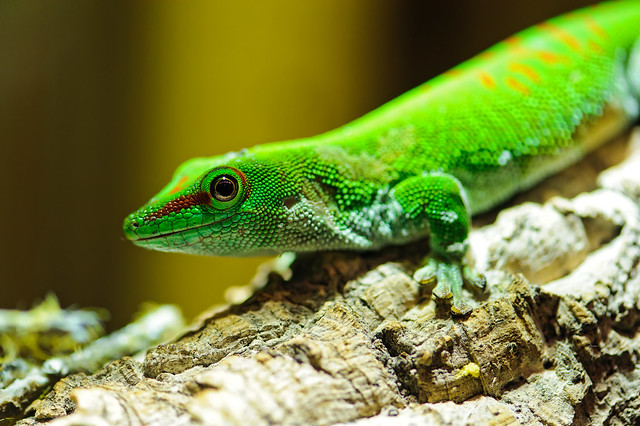
Madagascar green gecko
Photo by Tambako the Jaguar 
You may have admired the unusual looking lizards at your local wildlife center, or perhaps a neighbor may have an iguana in their back room.  If you have not raised a reptile before, let me suggest that you start with a leopard gecko.  The leopard gecko has two very big advantages, and one of them is that it does not get very big. The other major advantage of a leopard gecko is that is has been kept and bred in captivity since the 1920s, and is among the healthiest lizards and easiest to keep.

A juvenile gecko is quite active, but as they mature they become rather quiet and tame, and can be held and will take food from your fingers.  The adult gecko does not get larger than nine or ten inches and can be handled by older children.  Even younger children can hold them, but make sure they are supervised to handle the gecko gently and to avoid picking them up by the tail or holding the tail tightly.  As with other lizards in the reptile family, their tails can break off.  Actually, this might be an interesting occurrence for children, as the tail will be regrown, though it never looks exactly the same as the original tail

Leopard geckos are easily kept in an aquarium or other plastic cages, as long as each gecko has at least ten inches square of floor space.  The cage should be a minimum of twelve inches high. Have a shallow bowl of water that doesn't spill as the lizards crawl into or over it.  The food bowl for the gecko can be something about the size and shape of the lid for a gallon jar, a larger flat area.  You will be using crickets or other insects as food, and it is better if the food remains in the food bowl.  The bottom of the cage should have some kind of paper toweling so that it can be changed in order to keep the cage clean.

One really important point about raising reptiles is to keep the area sufficiently warm.  Geckos thrive best when the daytime temperature is in the eighties, up to eighty-eight degrees.  Nighttime temperatures can get to the middle sixties without causing any health problems.  If your house is normally cooler than that, a lamp with a forty-watt bulb over the top of the cage should create enough heat to keep the gecko warm.  There are also hot rocks that you can buy and put in the cage.  Keep the cage out of direct sunlight (because it will get too warm) and have a screen cover for the top if you have small children or cats in your household.

Once you have the environment, go to a reputable pet store and select your geckos.  Leopard geckos come in a variety of colors, and you can keep several in the same cage as long as there is only one male in the group (most geckos that are sold are female).  They eat mealworms and crickets, and correct care and feeding should be discussed at length with the seller.  A well taken care of gecko can live as long as twenty years.

Raising a reptile can be a fascinating hobby whether you are eight or fifty-eight years old.  Leopard geckos are among the easiest to raise, are easily tamed, and are always beautiful and interesting pets.  Consider a gecko for your next pet.


2017-12-28

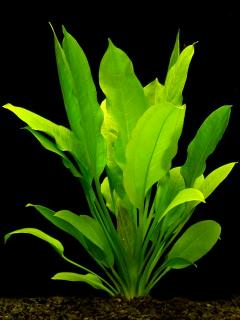
Transparent Leaves on AMAZON SWORDS

Echinodorus bleheri (Amazon sword plant, altho...
Echinodorus bleheri (Amazon sword plant, although other plants are
also known under this common name). The plant is cultivated for and used
in freshwater aquariums. The species is native to the Amazon Basin.
(Photo credit: 
Wikipedia)
A common experience with Amazon Sword plants is that you will find them growing well, otherwise completely healthy, but with almost transparent leaves. Over time, the general health of the plant begins to degenerate.

This problem is caused by the chloroplasts in the leaves beginning to die, how badly the plant is affected depends on how advanced this has become. Unfortunately, there are a number of causes of this particular problem so it may be necessary to try a number of different approaches before a remedy can be found. If the plants in your tank are overall generally healthy, then do not worry too much, it is most likely that there will be no serious long-term damage you need to be concerned about. The most likely causes are a lack of soft, slightly acidic water, lighting conditions, and either an iron or potassium deficiency.

One of the most important aspects of plant keeping, outside of maintenance needed to keep water chemistry balanced, is ensuring that plants have the correct level of lighting. It is particularly helpful if lighting used is in the red or blue spectrum, as it is this wavelength that is used for photosynthesis. Amazon Swords will need roughly 2 to 3 watts per gallon of light to grow properly, if you have a tank greater than 18 inches in depth you will need a little more to penetrate to the bottom. If your tap water is hard and alkaline, consider using distilled water for water changes. A decent fertilizer with Iron and Potassium as some of the macronutrients it provides should eliminate any deficiencies.

It is advisable to make sure that everything in your aquarium has very similar needs and the closer this is, the better! It is always important to strike this balance, particularly if things begin to go wrong with one or more aspects of the aquarium. This is the point where you may change lighting intensity, the balance of water chemistry and other factors of the aquarium. Providing that you have done your research beforehand, trying to treat problems with your Amazon Swords should go smoothly, just make sure to be vigilant on how the aquarium fares with changes in water chemistry, lighting, hardness, and acidity.

Keeping Amazon Swords can be very rewarding. If you begin to have this problem with them, once you have worked out what you believe has gone wrong or may be causing the issue, you are well on the way to treating them successfully.


With live aquarium plants, you can overcome all the problems of a non-planted aquarium. You can improve the quality of your aeration, filtration, food and algae control. You can improve the lives of your fish.


2017-12-27

Fact Sheet: GOLD BARB (Puntius semifasciolatus)

Gold Barb Puntius semifasciolatus 2.png
Photo: Wikipedia
The Gold Barb, Puntius semifasciolatus is an excellent little aquarium fish. It usually grows to about two inches long (5cm) although I have seen ones nearer 4 inches (10cm). The Gold Barb is from Asia although the actual Gold form does not exist in the wild. Their usual lifespan is about five years.

Naming Confusion
This fish has many names. Other Common names are Golden Barb, Schubert's Barb, Green Barb, Half Stripped Barb, China Barb, Chinese Half Stripped Barb and Six Banded Barb. Other Scientific names it has been known by include: Barbus semifasciolatus, Pontius Shubertii, Puntius Shubertii, Barbus Shubertii and Capoeta semifasciolatus.

To add to the naming perplexity, the Gold Barb is often confused with: the Golden Barb (Puntius gelius) or the Gold-finned Barb (Puntius sachsii). The species name Shubertii refers to Tom Shubert of Camden, New Jersey, USA who developed the Gold Barb. He did this by selective breeding, presumably from the wild form of Puntius semifasciolatus, in the 1960's. I remember when I was a teenager keeping fish in the 1960's and later that the Gold Barb was called Barbus Shubertii. It was believed by some people to be a distinct species although there was already a suspicion that it was a form of Puntius semifasciolatus. I do not think that Barbus Shubertiiwas ever a valid scientific name.

Water Conditions
The Gold barb thrives in cooler water than most tropical fish. 18 - 24 degrees C (64 - 75 degrees F) is this fish's preferred range although it will certainly survive several degrees above this and a few degrees below. This means that it is suitable for either a tropical aquarium with the temperature set at 24 degrees C (75 degrees F) or an unheated tank in areas that do not get very cold. It is interesting to note that the color change was not the only change that happened when Mr. Shubert was breeding these fish. The Gold form of the species is a little less cold resistant than the wild type.The wild-type is sometimes sold as the China Barb and is a good aquarium fish although not as attractively colored as the Gold Barb.

The Gold Barb likes fairly soft, slightly acidic water, but does well over a range of pH. I usually aim for neutral (7). It will tolerate a moderate amount of hardness in the water.

Food
The Gold Barb is an easily fed omnivore. Any good quality fish food is an excellent basis for its diet. As with nearly all fish, and most other animals, the Gold Barb benefits from the occasional change in its diet. Live food like mosquito larvae and Daphnia are gobbled up greedily. Frozen bloodworms also make a good treat.

Companions
The Gold Barb is a schooling fish and a minimum of six should be kept. The Gold Barb is not as likely to become a fin nipper as Rosy Barbs and Tiger Barbs but can be kept with these fish as well as with other slightly aggressive fish like Paraguay Tetras, Buenos Aires Tetras and Colombian Tetras. Because the Gold Barb is peaceful it can also be kept with fish like Pristella Tetras and Rummy Nose Tetras. I would not recommend them as companions for Siamese Fighting Fish, Guppies, and Endlers Guppies. Small fish like Neon Tetras and Cardinal Tetras can certainly be kept with smaller Gold Barbs. In all cases, avoid too great a size difference between the fish in your aquarium. Do not put large, aggressive or predatory fish with Gold Barbs.

Breeding
Gold Barbs scatter their eggs over plants, preferably fine leaved ones. The males tend to be brighter in color and when ready to breed will get an orange-red belly. The females are duller in color and plumper. An increase in temperature to about 27 degrees C (80 degrees F) as well as a drop in pH to about 6.5 will tend to encourage them to breed. The spawning can be a little violent, so the tank should be reasonably big. I suggest at least two feet (60cm) long.


The actual spawning will usually take place when the tank starts to get light in the morning. I suggest removing the parents immediately after spawning. The average number of eggs per female is about a hundred although I have known of a female that produced over 400 eggs at one spawning.

An alternative way of breeding them is to have them in as big an aquarium as possible, with large numbers of plants and leave the parents in. Of course, you are likely to get fewer babies surviving, but this is a little closer to what could happen in the wild. A variation on this method is to put them into a well-planted pond in the summer months and catch all the fish before it gets too cold in the autumn (fall). The eggs are a yellowish color. They should hatch in 2-3 days. The fry will eat fine dry foods but benefit from suitable sized live foods at all stages.

Pest Fish
As with all captive fish, do release your Gold Barbs into the wild and do not put them in a situation where they could get out.