2018-01-08

DALMATIAN MOLLY in the Tropical Aquarium

Dalmatian molly
Photo: Wikimedia (CC)
Each Dalmatian Molly pattern is unique, some having more black spots than others and some being much more white. Their bodies are chunky with rounded fins, except for the male's anal fin, which is pointed. They can grow up to 4-inches in length.

Although Dalmatian Mollies have peaceful temperaments, they do get a bit nippy. Provide them with plenty of sturdy plant life for nibbling to keep the nipping of other fish at bay. Plant life is optimal too because of their need to eat plenty of algae.

Angel Fish, Guppies and Platys are well-suited mates for the Mollies. Also, consider housing them with other Molly breeds. There are many types to choose from and they will cross-breed. It's kind of a fun surprise, the different combinations of fry that result.

Dalmatian Mollies do enjoy chasing other species around, but they generally cause no harm.
It is important for the health of the Mollies to have aquarium salts added to the water. For every two gallons of water add one teaspoon of salt. Take into consideration before adding other species to the tank that they can tolerate salt water. The water temperature should be between 68-82 degrees Fahrenheit. Dalmatian Mollies need plenty of swim area, so 1-inch of fish per 1-gallon of water is best.

For optimum health give your Dalmatian Mollies not only algae-based flake food but small amounts of greens. Lettuce and cooked peas are good choices. They also enjoy occasional snacks of freeze-dried bloodworms or tubifex.

Chances are good that when you bring home your female Molly, she will already be pregnant, as she is able to hold sperm for up to six months. The gestation period is anywhere from 4 to 6 weeks. Being a livebearer, she will give birth to more than 20 little free swimmers at one time. Some people place their pregnant Mollies in a breeding net before birthing. This is a bad idea because she will likely become stressed.

For the fry, have ready aforehand a 9 or 10-gallon tank. After the mother gives birth, remove the fry with a turkey baster and put them into their own tank. Of course, you can't be watching the aquarium 24 hours a day, so have plenty of floating plant life for them to hide in until you are able to get them to safety. You will also need to have your filter covered with netting before they are born, as it is likely many of the fries will get sucked into it. If you choose not to have a separate tank for the fry than be sure you add extra floating plant life for hiding.


The fry can eat crushed flake food and baby brine shrimp.
The Dalmatian Molly grows to adult size in about 3 months. Well before that, they may join the other fish in the community tank. You'll be able to judge when they are big enough to not be eaten by the bigger fish.

The average lifespan of the Dalmatian Molly is 2 years.
You're going to enjoy watching these black and white beauties race back and forth, stopping for a nibble here and there.


2018-01-07

If You're Going to Own a RAINBOW TROPICAL FISH, Read This!

English: A picture of a male Bosemani Rainbow ...
A picture of a male Bosemani Rainbow fish.
(Photo credit: 
Wikipedia)
Are you looking for a low maintenance fish that is nevertheless vibrant and exotic? If this sounds like you, then the rainbow tropical fish is the perfect choice for you. This sadly overlooked species is a mellow little animal that is ideal for beginner and veteran aquarium keepers alike.

Why is the rainbow tropical fish such a rare find? This is largely because many fish stores sell fish as juveniles or babies. Rainbow tropical fish don't tend to get their vibrant colors until their much older-as young fish they tend to be brownish green. These school dwelling fish show their colors when attracting mates. Unlike much tropical fish, they show no signs of aggression when other males are in the tank. Having a female or two will be ideal for breeding as well.

However, when choosing fish for your tank, be sure not to overcrowd them. While these are relatively small fish, they're still a school dwelling species that needs lots of room to roam. If you are unsure as to which animal to include with your school, try asking your local fish store.

Along with being beautiful, rainbow tropical fish are able to get along with a wide variety of aquarium fish. Oftentimes the problem is finding tropical freshwater fish that will be compatible with the rainbow fish; even tetras are known for nipping fins every so often. Some equally relaxed fish include guppies, angelfish, rasboras, and loaches. In addition to being a very mild tempered animal, they're relatively hearty as well, making them ideal fish for beginning tanks.

Some other things to remember when raising rainbow fish is the composition of your tank. Be sure to include lots of places for your fish to hide or sleep. These include broad-leafed plants, large rocks, and pieces of driftwood. Being naturally shy creatures, rainbow tropical fish need places for privacy and will lose their natural colors if overstressed.

Additionally, like most fish, rainbow fish are sensitive to extreme water changes. When caring for this species, be sure to have a quality water testing kit on hand. This allows you to check the levels of ammonia, nitrate, calcium, and other substances. In addition to this, having a high-quality heater and thermometer can't hurt either. There are even brands of heaters that have a memory setting, allowing you to keep the tank's temperature from fluctuating.


These are only a few things to consider when caring for a rainbow tropical fish. By being patient and diligent, you will be able to see just how much these tiny creatures can brighten up any tank. Learn more today!


2018-01-06

BETTA FISH Care Guide

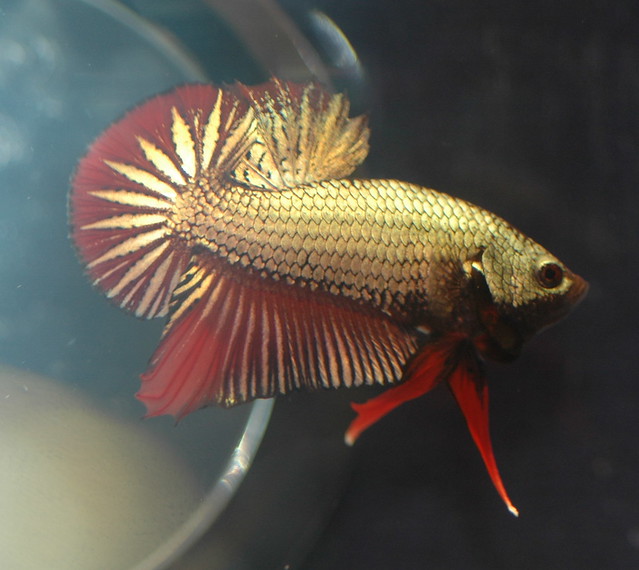
HMPK Dragon Genes M - Betta-Territory
Photo  by Daniella Vereeken 
Betta Fish Care Guide Reports
In accordance, Betta Fish Care Guide reports, Those of you who know me understand that We have 3 Bettas and have nearly 24/7 with them. They are users of my household, my kids in a funny kind of way. They challenge me, they make me laugh and there have been periods when they have been the explanation of amazing distress in my life. These are the days we are planning to speak about here. These are the periods we want to listen to.

Betta Fish Care Guide Points

In Betta Fish Care Guide, there is a great deal to growing a Betta, and raising a Betta is exactly what you do. In the event you go to the Local Fish Retail outlet or go online or exactly where you get your Betta, you are taking a fish (especially the males) that have been raised a few fish are. There are good reasons a Betta will not react to attractive much any other fish in your fish tank to the other fish in your tank. He has never been around other fish since he was a fry. Soon following it was motivated that he was a male he was deleted from the tank and placed in someone jar or some other short container so he would not struggle to the death with others of his kind. He easily doesn't understand that there are other fish who are Permitted to be in with him. Well, We have been not going to go into the whole Betta psychology now.
Betta Fish Care Guide about Types
For more Betta Fish Care Guide, Contrary to famous opinion a Betta cannot live in a BETTA BOWL or such comparable sized tank. We would say the minimum for a, in fact, glad Betta is 5 gallons. The Betta bowls or cute little containers they have to appear up with now are impossible to heat or filter and we can come to that momentarily, but Bettas are Tropical Fish and as this kind of, desire to be kept in heated and filtered water. Being Tropical Fish, Bettas should be saved at a temperature of 78 degrees F (25 degrees C) at a Lowest on a consistent basis. It would be much the more to aim for 80 degrees F (26 degrees C) to make them even happier. 

It is vital as the Betta seems to be especially prone to some of the cold water situations such as Ich and Finrot. These diseases are essentially prevented by conserving the tank temperature at steady and acceptable ranges. and water parameters fantastic. Here again, because the Betta is a Tropical Fish and especially because you love your fish and do not want to field him to have to live in a sewer, you need a GOOD filter in the tank you will be housing him in. This options chemical, biological, and mechanical filtration - no undergravel filters (UGF). You will discover many varieties of filters out there but not all of them are ideal for a Betta. Bettas are not given to being in a strong current so you desire to discover a monitor that is adjustable to the levels that it supplies a ripple or brief waterfall - not a torrent. They do like some movement to the major surface of the water as they are one of the Labyrinth fishes. These fish have an organ on the major of their heads that not only allow them to breathe air like we do, but demands it.


So if dust, scum or everything else builds upon the surface of the water and the Betta is prevented from reaching a clean floor spot, he will drown. He also uses his gills so he can vacation underwater for a time, but if you watch your Betta he'll go to the surface and "butt" the surface with the top of his brain, this is his "breathing air". A lot of proprietors supply a tall plant for their Betta to sleep in at night so they won't have to swim so far to "breathe".

    Minara Zumey Minora is a doctor and her hobby is writing - Article Source: GoArticles


2018-01-05

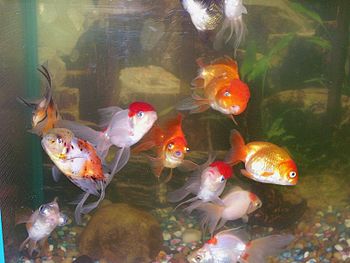
Shocking Dangers of Bad GOLDFISH Care (Part 2): Goldfish Overcrowding

Category:Goldfish images (Original text : 'A S...
 'A School of Fancy Goldfish (Photo credit: Wikipedia)
Goldfish overcrowding (also called "goldfish overstocking") is a serious cause of goldfish dying prematurely or them having stunted growth.

I find it's helpful to use the analogy of your own house. Imagine you doubled the number of people living there. And then you couldn't clean it for several days. What would it be like? How would you react to that?

Oh yes, you can't open the windows or doors either. You are stuck with the same amount of oxygen in there as before. How would it feel?

Now imagine your goldfish. They are in a man-made artificially-constrained space (an aquarium). They are swimming in a limited amount of water and, like babies, they eat and excrete. But unlike babies, they can't cry and be heard if they are in distress.

Many people assume that when they go to a pet store and see fifty small goldfish in an aquarium that it means it is OK to buy a whole bunch of goldfish. And then keep them in one small tank at home.

Unfortunately, what they don't realize is:

  1. Pet shops retail goldfish fast so they can keep large numbers - for short periods - in smaller aquariums
  2. Young goldfish ("fry") are usually very small so you can keep a large number of them together for a few weeks
  3. Goldfish aquariums are usually cleaned very frequently (daily) in pet stores to remove uneaten food and poo
  4. When you get goldfish back home, they will start to grow very quickly. In fact, you'll be amazed to wake up one day and see how much they have grown

My rule of thumb: a 54-liter tank for a maximum of 2 average-size goldfish. The larger the aquarium, the better. You can never have an aquarium that is too big.

So why is overcrowding such a hazard for your goldfish?

Let me give you seven reasons why:

  1. The waste products of excretion reduce the amount of available oxygen and cause ammonia build up
  2. This means goldfish become poisoned by the water they are living and "breathing" in
  3. As ammonia levels build up and as the goldfish continue to grow, there is less oxygen available in the aquarium
  4. Goldfish will begin to gulp at the surface or start to develop a host of common goldfish sickness problems
  5. They begin to suffer from oxygen starvation
  6. Without adequate room to move, breathe or play the fish begin to suffocate
  7. Eventually, the combination of stress and oxygen starvation leads to death

Here are a common mistake goldfish keepers make: just because the aquarium water looks clear does not mean it is clean or healthy for your goldfish. When a fish suffers from ammonia or nitrate poisoning, then what's happening is that the concentration of ammonia (a clear colorless liquid) is becoming higher. The water looks clear, but it is actually poisonous. You can only be sure it is safe by using an ammonia testing kit - and conducting regular water changes.

It's also worth noting that "goldfish stress" is a very real phenomenon and can result from several reasons. Again, even if you're not agoraphobic, imagine you are jammed into a small space with a bunch of people. How would you feel? I remember being stuck on a train once on a hot Summer's day. It was so crowded that I got hemmed in against the wall: I couldn't move. I remember stress levels rising fast...

Goldfish actually experience chemical changes under stressful conditions. They are designed to release growth-stunting hormones in hostile environments. And you don't want to be unintentionally creating a "hostile" environment in your aquarium - by having too many fish.

In the worst cases, goldfish get so big they can't physically turn around in an aquarium. They get stuck in the same position. They can't feed properly and become distressed.


Finally, your goldfish need plenty of space to move, swim and play. You can't expect them to be happy if you don't give them the room to move about. It'll be a lot more enjoyable for you to watch them moving gracefully. It gives them the chance to engage in a normal range of healthy behaviors. These are fascinating to observe (and watching goldfish is proven to bring your blood pressure down too).


2018-01-04

AQUARIUM FISH HEALTH: Dealing With COTTON MOUTH DISEASE (Mouth Fungus)

Cotton Mouth disease also knows as Mouth Fungus is a disease your fish can get and it needs to be dealt with quickly. Cotton Mouth disease is not as common as the white spot disease, but, it is highly infectious and contagious. 

The victim fish shows a whitish fungus around the cheeks and lips. The lips may become swollen and rot away. Sometimes a rotten strip of lip attached only at one end will move in and out of the mouth as the fish breathes.

VHS.png
Photo Wikipedia
Fish infected with Mouth Fungus lose their appetite and their movement become sluggish. If no adequate treatment is given, the whole frontal part of the head may be eaten away finally and the fish dies. 

Unless the affected fish is of considerable value, it should be killed before this fatal disease attack the other occupants, of the tank. Think about it... is trying to save the life of one fish worth risking the death of the rest of the fish in your aquarium? 

But if you insist on keeping the fish or in case the infection has already been passed on to other occupants, the following treatment is advised: 

- Swabbing the mouth of the victim fish with a soft cloth dipped in a strong salt solution. Then you must then keep the patient isolated in a bucket or jar containing a strong salt water. 

- Try swabbing the lips with a 5 per cent silver mercury preparation.
- Make a solution of Terramycin or Aureomycuin by dissolving 50mg per gallon of water, a rapid cure is expected within 48 hours. 

You can try all of the above remedies, but the most common remedy is the popular Methylene blue solution. To perform this remedy the sick fish should be placed in a jar, bucket or a treatment tank into which has been added a methylene per blue to color the water deep blue.


2018-01-03

SHIRO UTSURI - Koi Fish

SHIRO UTSURI - Koi Fish


2018-01-02

DISCUS FISH Health - How to Keep Your Discus Happy and Healthy For Years


Discus fish health truly has 2 main areas of concern and those are the fish's water and the discus fish's food. Of smaller concern, but worth discussing is that you must do a little analysis before you put your discus fish in with other species in your tank. They may not be good tank friends and this could cause your new pet stress.

Knowing what signs to have a look for can help enormously with discus fish health for the easy reason that treatment of sicknesses is boring and hard. It's best to do everything that you can to be preventive in your attempts at frustrating any stress causing environmental issues.

There are occasions where adding some medication to the water will solve the problem, however, this is not the case almost all of the time. Your discus fish's water is like the air that we breathe as humans. Should our air be soiled and polluted, we'll develop health issues. With discus fish, you need to keep their water clean and at the right temperature and pH levels. You will need to do a partial change in the water one or more times a week changing out between twenty-five and fifty percent of the water. You should have an excellent biological filter and ensure that it stays clean.

An alternative way to be fully certain that your discus stays healthy is by utilizing and reverse osmosis filter. A reverse osmosis filter uses a little, semi-permeable surface that permits only water molecules to pass through it, filtering out minerals and trace substances which are unhealthy for the discus. When using one of these, you could have to think about adding some minerals as this removes everything except pure water and there are a few things that your fish wants.

One of the largest health concerns with discus is bugs and worms that they can develop, and their immunological systems will keep them in check till they become stressed. Observing the fecal matter of your discus fish can show symptoms of bugs or worms in your fish. White feces, clear feces are 2 signs. Apart from their feces, you can tell mostly by their behavior. Bugs can bring about a number of observable symptoms from hiding, developing a darker color to food strikes and not eating.


Often times if a number of these symptoms happen, you can try doing a water change in the tank. Discus fish are terribly delicate to their environment and could cause them stress. If this doesn't do the job, there are medicines that you can put into the water that can help clear up any discus health issues.

Among those are metronidazole. Metro, as it's known, is step one in treating bugs should your discus get infected. Also common with these bugs are worms, so you must find a de-wormer to be employed in coordination with your Metro treatment.

As stated before, prevention is way easier than treatment when it comes to discuss health. Following these tips, while ensuring your discus has proper nutrient elements and feeding will ensure that you could have satisfied and healthy discus fish.


    Evelyn Stone is a discus fish expert. - Article Directory: EzineArticles