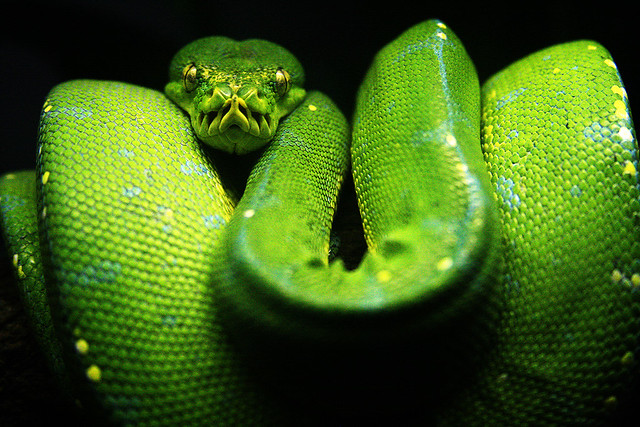
Most common snakeskept as pets in the reptile category are the corn snakes and the Royal Python. Pythons do have teeth and will bite even though they kill their food by constriction. A python can possibly live to be 40 years old when conditions are right and have been known to be the longest snake on record, reaching well over 30 feet in length! While this is the exception to the rule, it should still be a consideration when choosing a snake for a reptile pet.
You must know the proper requirements for your snakes before you commit to keeping more than one in the same enclosure. All snakes are not the same! Feeding them together is discouraged as well. Some snakes eat other snakes, too, so be careful about your choices. There are people who live in the country who will keep the king snake alive simply because it is known to kill other harmful snakes.
There are different types of corn snakes and different types of pythons. Know your type before you purchase. Some make better choices than others for pets. Don't touch your snake if it's in the water bowl and has developed milky eyes. This could be a sign of shedding. Because the snake has limited vision, it could strike out at you in defense, not knowing you don't intend to harm it.
There are things that could make your snake reluctant to eat. Force feeding is not a good idea. Illness, stress, shedding, temperature, humidity, and occasional fasting may make your snake's appetite change.
The anaconda is not the longest snake ever known, but it is the heaviest. Although anacondas have been kept in captivity, it is not advisable. For one thing, it isn't fair to the snake. Their natural environment is a river. Some people have gone so far as to keep venomous or dangerous reptiles for pets, including rattlesnakes. This is highly discouraged, especially in homes containing children or the elderly.
Wildlife shows make the adventures with reptiles seem fun and exciting. But most people should note that these people who interact with the snakes and other reptiles are experienced, trained professionals. They didn't become enlightened overnight.
Scaled reptiles are classified as Squamata, which includes lizards and snakes. Detachable jaws are one of the fascinating talents of the snakes. The other qualification for inclusion as a Squamata is the scaly skin or shields.
Snakes are thought to have evolved from lizards---but most people are far more scared of snakes than they are of lizards! It's ironic that the snake evolved from the lizard, yet lizards are one of the small animals the snake is known to eat.
Some snakes can climb trees to steal eggs from the bird nests. They've even been known to devour the unfortunate bird left guarding the eggs. Because the snake swallows its food whole, digestion is more complicated and tiresome for the reptile. This will cause the snake to regurgitate if disturbed during digestion so it can escape danger.
Yes, snakes can be interesting pets and interesting reptiles. Just make sure you know what you're dealing with before you attempt to make contact!
Different Mbuna from Lake Malawi (Photo credit: Wikipedia)
Malawi Cichlids originate from the third largest lake in Africa and the eighth largest in the world, Lake Malawi. Lake Malawi is home to more fish species than anywhere else on earth. Being a rift valley lake, it is a very rocky lake with little vegetation. The edges of the lake provide a different type of habitat; more sandy with fewer rocks and more open water. These two different types of habitat give rise to two different groups of Cichlid; the rock dwellers (or mbuna) and non-rock dwellers.
If you are thinking of keeping Malawi Cichlids you will really need to decide which group you want to keep as generally the rock dwellers and non-rock dwellers do not get on well together. In fact, they do not particularly get with other types of fish, so you will really need to restrict yourself to just mbunas or non-rock dwelling Cichlids. Once you have decided you will need to set up your aquarium accordingly. For rock dwelling fish, it should come as no great surprise that you need plenty of rocks. Not only this though, your fish need plenty of little caves and places to hide and explore.
The non-rock dwellers prefer a sandy substrate and generally more open water. They should not have a completely bare tank though, they do need some interest. Typically they should have just a few rocks scattered over the floor of the tank, and they do not particularly need caves.
In their natural environment, Malawi Cichlids live in water temperatures of around 24-26C or 76-79F, therefore you will need to try and replicate this within your aquarium. In order to avoid variations in temperatures you will need to locate your aquarium away from heaters and out of direct sunlight.
A Carpenter's Flasher Wrasse (Paracheilinus carpenter), also known as a Redfin Flasher Wrasse, or Carpenter's Fairy Wrasse, is a delightful addition to your saltwater fish tank. This fish is characterized by its rich orange color accentuated with blue vertical stripes. Its fins are also decorated with blue and yellow accents. What differentiates the male from the female species is the richness in color as well as the size of dorsal rays. Males tend to have a more distinct and rich color as well as elongated dorsal rays that are highly effective in attracting females during the mating season.
This species of fish is quite peaceful and less aggressive, requiring just about a tank size of 20 gallons to swim. Your tank should have a net placed on top for this fish is known to jump from the tank every now and then. Being among the less aggressive type of fish, Carpenter's Flasher Wrasse must be the first fish to be introduced into the tank. Other fish tend to fight and bully this fish if introduced when other fish have established territorial dominance in the tank. Take note, though, that this fish is highly possessive of its harem, and will fight other males in the tank for a mate. It would be best to keep a ratio of one male to four females to ensure peace among your Carpenter's Flasher Wrasse.
As with other marine tropical fish, the diet must be highly diversified in order to keep the colors rich and distinct. Although plankton eaters in the wild, aquarium kept Carpenter's Flasher Wrasse can be fed finely chopped seafood, mysid, and brine shrimp. In the wild, this species of fish propagate through egg-laying, although there is no known incidence of Carpenter's Flasher Wrasse breeding inside a home aquarium. The fish can be bought for 47.
By BC Hodges BC is a cichlid enthusiast and wants to inform people of the great joy cichlids are to keep. Article Source: EzineArticles
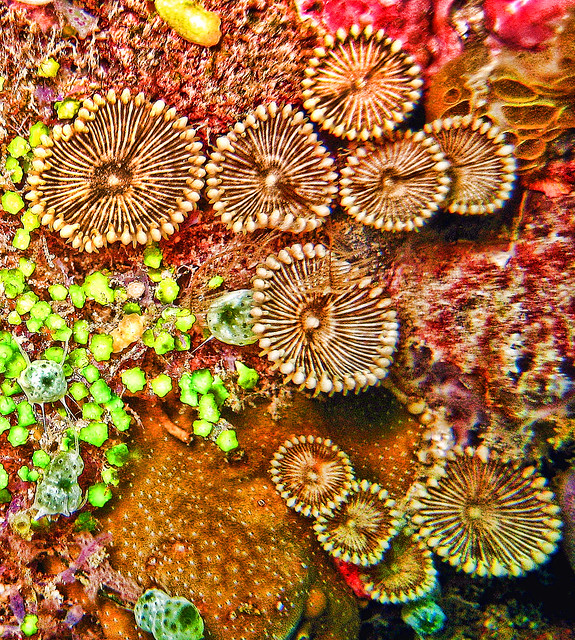
Zoanthids are rightfully beloved by nearly all marine aquarists. They are often bright, uniquely colored and fast-growing. Because they are generally hardy, they make an excellent choice for the beginning aquarist; however, the rarer color patterns tempt even experienced reef aquarists. Despite their popularity, many aquarists are unclear of zoanthids relationship to other marine animals, especially those that we commonly call coral. On the one hand, zoanthids look like miniature sea anemones, yet they also seem to resemble soft corals such as the Glove Polyps pictured below (Clavularia species-pronounced "klav-yoo-lahr-ee-ah"). In truth, zoanthids are neither anemones nor soft corals-so what are they?
"Flower Animals"
Let's start with some basics. Zoanthids, like all of the animals we typically call "coral" in the marine aquarium hobby, are cnidarians (pronounced "nigh-dare-ee-yans"). More specifically, zoanthids are part of the class Anthozoa, which includes the soft and leather corals, sea anemones, mushroom corals and stony corals (and exclude other cnidarians such as fire corals, lace corals, jellyfishes, and sea wasps). Anthozoa, as a word, originates from Greek ("anthos" and "zoion") and translates roughly as "flower animal," which is an apt name for most zoanthids. Like sea anemones, mushroom corals and stony corals, zoanthids are called hexacorals because they have polyps with tentacles in multiples of six (octocorals, on the other hand, have eight tentacles). Zoanthids, unlike the "true" or stony corals (what hobbyists generally term SPS and LPS) lack skeletons, but they are also not soft corals (which are all octocorals). The polyps of zoanthids are either solitary or embedded in so-called mats. Solitary polyps are often connected to other polyps by runners (called stolons, pronounced "stoe-lahn"), while mat polyps embed themselves in a tissue matrix or mat (called a coenenchyme and pronounced "see-nehn-kyme").
When the aquarist looks at a zoanthid polyp, they are generally focused on the oral disc. Each zoanthid polyp has a mouth (called a siphonoglyph and pronounced "sye-fah-no-glif"), which is part of the oral disc and generally surrounded by two rings of tentacles. Like all cnidarians, zoanthids possess nematocysts (pronounced "ne-mat-oh-sist") or stinging cells (the word cnidarian translates from the Greek as "stinging nettle"), which assist in food capture. When it comes to defense, however, it is a toxin called palytoxin, which keeps most predators (including the aquarist) at bay.
It is common to tout the fact that most zoanthids are easy to keep and require no supplemental feedings. While it is true that many of the commonly available zoanthids are zooxanthellate (zoo-zan-thuh-late) and host symbiotic zooxanthellae (zoh-zan-thel-ee) in their tissue, the reality is that nearly all zooanthids rely on particulate food and plankton capture to sustain their metabolism. As a result, nearly all should be target fed in captivity (in addition to providing appropriate lighting).
Identifying Zoanthids
It is very difficult to identify individual species when dealing with zoanthids. That is why you frequently see them sold by their genus name (e.g. Zoanthus spp.) and a creative description of their coloration (e.g. Halloween Zoanthids). Zoanthids are often (there is much debate that is well beyond the scope of this article) divided into several families. The most frequently seen zoanthids in the aquarium trade are from the families Parazoanthidae and Zoanthidae. Within the family Parazoanthidae, the genus Parazoanthus (pare-ah-zoe-an-thuss) is particularly popular (e.g. Yellow Polyps), while the Zoanthus (zoe-an-thuss) genus (e.g. Z. pacificus and Z. sociatus) and the Palythoa genus (which is now often seen as being congeneric and nearly conspecific with the genus Protopalythoa) are the most commonly represented genera from the family Zoanthidae. So-called Acrozoanthus (ak-roh-zoe-an-thuss) or Stick Polyps are also seen with some frequency in the hobby and are usually classified as belonging to the family Zoanthidae.
Family Parazoanthidae - Brief Description and Husbandry Tips
Species from the genus Parazoanthus are the most common in this family, and, as species identification is uncertain, most are sold as Parazoanthus spp. or simply Yellow Polyps. Although called Yellow Polyps, their coloration can vary from a cinnamon-brown to a bright yellow, with some species even taking on a red color (e.g. P. puertoricense). The polyps reproduce by budding at the base of the parent polyp, and they form colonies in this way that encrust rocks, shells or vacant worm tubes. Some Parazoanthus species live commensally with other organisms (e.g. sponges), but most of the specimens seen in the hobby contain symbiotic zooxanthellae within their tissue and, given sufficient light, will do quite well with only periodic target feedings. The fact that many Yellow Polyps are indiscriminate feeders means that they often survive in a mature aquarium without any target feedings. This fact, however, should not deter the aquarist from at least weekly target feedings of zooplankton-type foods. Moderate light, moderate to strong intermittent flow and supplemental feedings are the key to success with these attractive zoanthids.
Family Zoanthidae - Brief Description and Husbandry Tips
Recent research has found a remarkable similarity between the genus Palythoa and Protopalythoa, and so we will mostly deal with them together here. If there is a difference apparent in the aquarist, it is in the fact that Protopalythoa species' polyps (e.g. Button Polyps, Protopalythoa spp.) are often not embedded in the tissue matrix or mat, while Palythoa (pal'-ee'-thoe'-ah) species' polyps (e.g. Sea Mat or Encrusting Colony Polyp, Palythoa spp.) are. All have broad, flat oral discs surrounded by tentacles (perhaps more tentacles on Protopalythoa species). The discs may be brown, brownish yellow or even a cream color, and some have quite attractive fluorescent accents and striations. Sometimes the oral disc will be darker than the mat in which it is embedded, again, making for a nice display. All are fairly light tolerant and prefer moderate to high flow. As with all zoanthids, they will benefit from targeted feedings, and those with long tentacles and broader oral discs may require more direct feeding. One word of warning: be careful, as many of these zoanthids are competitive and will easily overgrow adjacent corals.
The Zoanthus genus is often the best-represented genus from the family Zoanthidae, and it is most frequently what people think of when they think of zoanthids. There are many species, and most are simply identified for the aquarist by their remarkable color schemes. The polyps are generally small with dramatic contrasting colors between their oral discs and tentacles. These animals rely heavily on zooxanthellae, so much so that some aquarists claim no food response occurs as a result of targeted feedings. In reality, this is probably because Zoanthus species are more selective in their feeding, but regardless, it is essential to place them in high light environments to sustain their zooxanthellae populations. Given the proper environment, these zoanthids are hardy, fast-growing animals that reproduce by budding and will rapidly spread across your live rock in a colorful display that will ad interest and beauty to your reef tank.
Something for Everyone
In conclusion, zoanthids are, generally speaking, highly interesting, attractive and hardy animals. They can add color to almost any reefscape, and they require little in the way of specific husbandry. Most grow quickly in captivity, and their collection from the wild generally has a little detrimental impact on natural ecosystems. Zoanthids are often the first cnidarians introduced to the beginning aquarist's tank, but the more uniquely colored and rarer species are equally coveted by advanced aquarists. In short, zoanthids offer something for everyone.
Blue Zoo Aquatics was formed in 2001 as a custom aquarium design, manufacture, installation, and maintenance company which provided its services in and around Los Angeles, California. The company founders and key personnel had either a background in marine biology or had spent their entire career in the saltwater aquarium industry.
Customers who bought a custom aquarium were also frequently asking us to provide livestock and aquarium supplies, so we created bluezooaquatics.com to showcase our entire product offering and make it available to everyone.
Today, Blue Zoo Aquatics has evolved into the complete source for all of your aquarium needs. Although we can still design and build you a beautiful custom aquarium, we are also proud to offer one of the largest selections of livestock on the web as well as a wide variety of quality aquarium supplies.
Our business has expanded, but Blue Zoo is still owned and operated by the same team of expert aquarists that have dedicated their lives to helping people have fun and succeed with saltwater aquariums. - http://www.bluezooaquatics.com Article Directory: EzineArticles
It is easy to maintain your aquarium clean even without the help of experts. With the help of the tips discussed below on easy ways for aquarium maintenance (Dayton, OH), you do not require more than three hours to accomplish the task. This will not only make your fish tank look beautiful, but increase its lifespan. Do weekly water changes as recommended.
Do not make a mistake of feeding your fish on too much food as well as too often. Any excess feed will pollute the pond due to decomposition. The rule of the thumb is put a quantity that will ideally be consumed right away. In addition, you need to purchase appropriate feed for the fish and follow instructions on feeding.
Ensure you maintain an optimum amount of light intensity for the fish to survive. Therefore, do not allow excessive light intensity in the aquarium. This is because an excessive amount of light will stimulate the growth of algae. Too many algae will then decompose depriving fish of oxygen. Hence, you need 6 hours of light a day.
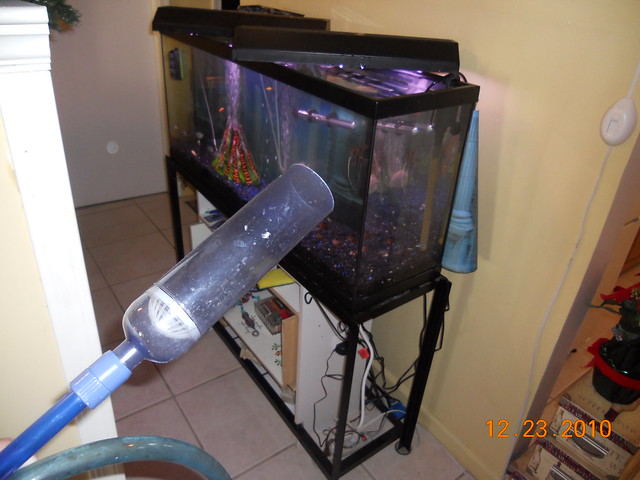
When cleaning the fish tank, remove 10-15 % of water and replace it with fresh tap water. The easiest way is to siphon water from a bucket into the tank. This will avoid spilling the water and messing up decorations and gravel. Fill the tank by placing the bucket full of water higher up and let the water flow by gravity into the fish tank. Do not fill the aquarium. Leave some space for the exchange of oxygen.
Remove undesirable phytoplankton. If you have any algae growing on the surface of the fish tank, use a scraper to remove on the glass before replacing the water. You may decide to use catfish to reduce the number of algae. However, keep in mind that catfish will not clear all the water plants apart from increasing more workload for your maintenance.
Check the temperature every day. It is critical to remember that saltwater fish live in a relatively narrow temperature range. A specialized heater bought at a pet store is used to raise the temperature. You need to maintain an optimum temperature in your pond. Therefore, get into the habit of checking the temperature of the aquarium regularly. This will prevent deaths that may result from the ecosystem due to extreme temperatures that are either too high or too low.
Where you have an unused aquarium, before use, rinse the tank with clean, warm, fresh water. Where there is grime build up on the glass using a mild detergent to clean. You may also use a window cleaner. However, ensure you rinse the tank thoroughly until all the soap is removed. This is because soap residues are harmful to fish and bacteria that is needed to keep the pond healthy and balanced by nitrification.
Cleaning your fish tank is easy and may not take a lot of time. Do not remove all the plants and decorations out of the fish tank. This will not only create extra work but will kill any beneficial bacteria, reducing the quality of your filtration. Remember the bacteria found in the pond forms part of the natural biological filter.
About the Author: Lelia Hall
You can visit aquaticinteriors.net for more helpful information about Proven Ways For Aquarium Maintenance Dayton, OH.
I grew up in Ireland on the outskirts of Dublin, and at an early age, my father purchased a farm, which became the responsibility of my Mother. Because it was at the time of war, it was obligatory for all landowners to farm their acreage, as the food was in short supply.
Previously we had lived in a modest house, and now suddenly I was immersed in the life of the farm, as well as schooling. We had cattle, poultry, horses, plus a small menagerie of animals, which I had collected with great avidity.
These included rabbits mice, guinea pigs and a raven, (of which I taught to say a few words), canaries, and parakeets, frogs, tortoises, and more,
This added to a collection of dogs and cats. The figures ran to fourteen dogs, and five cats. The dogs invariably got into the hen houses from time to time, with predictable catastrophic results, all the small animals over a period of time would expire, for a host of diverse reasons.
This, needless to say, would make me feel very guilty, as I had not yet come to a full understanding of life, I did not yet realize that all small animals would leave this world to go to whatever awaits us all sooner or later. I have to admit, however that carelessness and other interests, sometimes justified the comments.
We had a slew of farm hands and servants on the farm, which made the TV series Upstairs Downstairs seem very clear when viewed many years later. Many amusing incidents happened with predictable regularity, horses, broke out of their loose boxes, hens got slaughtered by the dogs, the farmhands and servants created many involved "situations" all of which caused my parent's endless problems. These would make the subject of at least one book, which perhaps someday I will write, but for now, I will stick to this theme.
One day I was sent into the city, to buy some electrical accessory. It irritates me that I cannot remember what it was, but I entered a large electrical store which was closing down, as the owner had passed away. Whatever I was seeking evidently was in the basement of the store, and I was directed down the stairs. I presume I found what I wanted, but in doing so, I noticed about fifteen aquariums, almost all of them empty. I had never seen an aquarium before, and in one of the aquariums in the store, there was a lone black molly. A girl assistant told me that the late owner a Mr. Handcock (that I can remember ) was a very keen aquarist, and had this department as a hobby. Because the store was closing down, they had already sold most of the stock and equipment.
I knew immediately that come hell or high water, I had to have that aquarium and the black molly. I did not have enough funds with me, even though it was going very cheaply, I earnestly besought the girl, to "hold" the tank etc, plus the molly, I gave her a small deposit, and promised I would be back within 24 hours. Taking the bus home, I prevailed upon my Mother, to lend me an advance of my pocket money, in fact, it took 3 weeks or more, the next morning I was waiting outside the store when they opened, to ensure I could complete the purchase. Well! that purchase, changed my life, within a few months, I had 5 tanks, some purchased from the same store, before it finally closed, acquiring other items from other people
I got to know over time. I was soon breeding Siamese fighters, as well as mollies and several others. However, the hobby was consuming not only my time and interest but taking up all and more, of my quite strict allowance. I soon found out that there was an aquarium society in Dublin which I joined with great enthusiasm, and then learned that there was no dealer with the closing of the Handcock store. Well, this opened a great opportunity, as by enlarging my collection and buying fish and equipment from England, I could pay for my hobby, and have even more tanks etc. I called this sideline business Irish Aquatics and saved over the next 5 years from my "trading" enough to pay for, half of my first home. At this time I was in Veterinary College, and although studies, sports, the ladies, and a host of other activities, occupied my time, somehow I managed to continue my hobby, and attend the monthly meetings of the aquarium club.
The club used to have a couple of shows a year, the members, as well as other societies, principally from the North of Ireland, would participate. There were categories of competition for best egg layer, best livebearer, best fish in show etc. The most attractive category by far for my taste was the competition for the most beautiful tank. Although the varieties of plants were limited at that time, the show tanks were amazing, especially as many members had access to a beautiful red sandstone which they used in many tanks as ornaments to set off the green plants.
I went on to do Marine Biology, some years later, as my love of fish, overtook all other interests in life. From there I went for many years into Aquaculture, and later on International fish farming consultancy. In 1989 I founded a company in Israel, called Red Sea Fish pHarm, in which I still hold an interest. In 1994 I started Fish-Vet Inc. which produces software for fish disease diagnosis, and this software is used by Governments, Universities, fish farms, veterinarians, and more. As a result of our cooperation with some forty-six professors in sixteen countries in the preparation of the software, we were able to create a few unique specialized treatments, that we also sell all over the USA. As a result of our cooperation
During 1997, I decided to get back into my first love within the hobby. I started to grow some plants, and experiment with making attractive layouts. I found that to achieve really good results consistently, one needed to pay close attention to many factors and that this required specialized equipment, which was not readily available, or at least not at a reasonable cost on the American market.
Why not try Live aquarium plants in your fish tank, they continue to grow and give oxygen to your fish. They look great and are possibly cheaper in my experience. Your fish will be healthier and it will be visually more aesthetic.